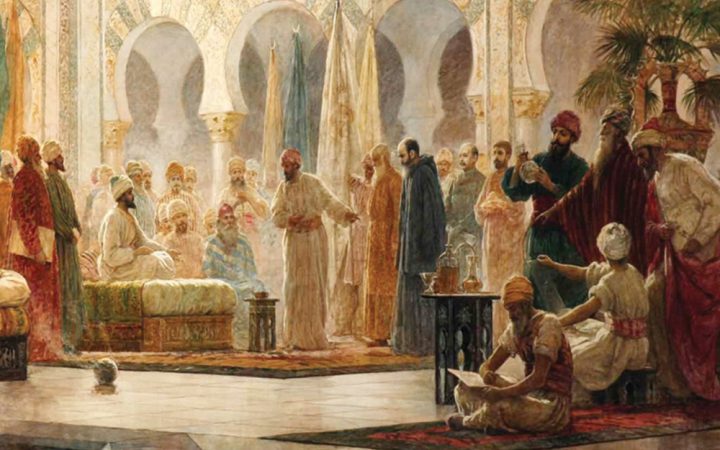
Islam was revealed as a comprehensive way of life that addresses every aspect of human existence; social, economic, political, legal, and moral. In today’s age, the secularisation of religion through the ‘separation of church and state‘, has led many to believe that religion does not have the answers to govern aspects of their worldly life, and instead, the governments of nation states do. Islam, has therefore been limited to acts of Ibadah (worship), and is not at the forefront in all other aspects of life; social, economic, political and legal.
A society’s true governance cannot rely on human-made laws and the constructs of modernity. Secularisation leads to fasad (corruption) and zulm (injustice), as it replaces Allah’s laws with man-made ones. “And whoever does not judge by what Allah has revealed – then it is those who are the disbelievers” (Qur’an, 5:44). You will also notice that whilst the laws made by man change with the present generations’ whims and desires, the Hukm Shari’ (rulings from the Qur’an and Sunnah) are constant, and undisturbed by the test of time and generations. What was ordained 1400+ years ago, is true today.
Islam begins with the premise that Allah is al-Haqq—the Truth. This tenet compels us to understand that political, legal, and social frameworks must reflect this truth, rather than bowing to the relativistic constructs imposed by human interpretation. Having said this, let’s examine the shortcomings of the modern state. It is important to note that Islam offers not merely a critique but a holistic alternative.
Nation States
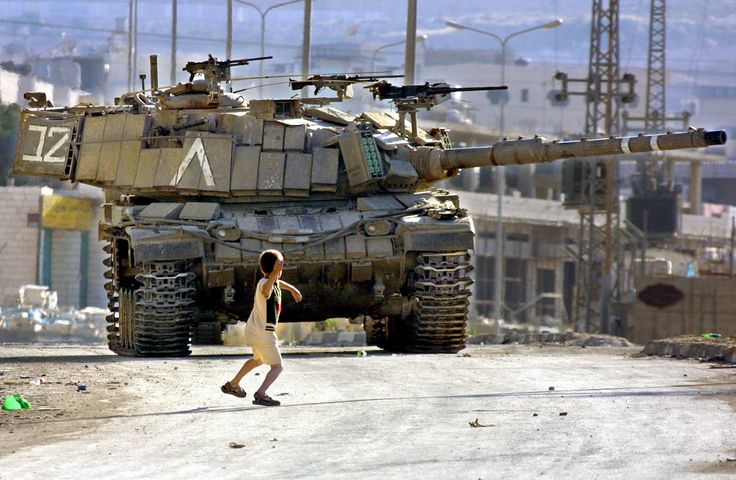
The modern nation-state is founded on a secular, territorial model where identity, rights, and value are determined largely by artificial constructs such as nationality, borders, and citizenship. This framework produces systemic inequality, where a person’s access to protection, movement, and dignity is tied to the randomness of birthplace or the power of a passport. In the nation-state model, moral obligations often stop at the border. The suffering of those beyond one’s citizenship becomes a political issue rather than a shared concern. This is notably apparent in the most recent wave of oppression in Gaza, which has been enabled for 18 continuous months.
Islam challenges this fragmentation. The Prophet Muhammad ﷺ said, “The example of the believers in their affection, mercy, and compassion for each other is that of a body: when any limb aches, the whole body reacts with sleeplessness and fever” (Sahih al-Bukhari & Muslim). Additionally, brotherhood in Islam transcends bloodline and borders. “The believers are but one brotherhood…” (49:10). This highlights a vision of a unified, responsive ummah. A global community whose bonds are not territorial.
Furthermore, the nation-state places sovereignty in the hands of fallible human institutions, marginalising divine law and moral accountability. This secular framework permits laws that contradict divine guidance, normalising injustice under the guise of legality. Islam, by contrast, asserts that ultimate sovereignty belongs to Allah alone: “…It is only Allah who decides…” (Qur’an 12:40). When governance is divorced from revelation, it opens the door to political corruption (fasad), moral relativism, and systemic oppression.
Centralised Power and Control
Modern governance systems are deeply entrenched in centralisation, where power and decision-making are concentrated within state apparatuses. These systems standardise education, enforce laws through constant surveillance, and shape public consciousness via media and propaganda. While such mechanisms are legitimised to maintain order, they suppress intellectual thought, and breed conformity. In contrast, Islam decentralises control by placing moral responsibility on the individual, guided by divine revelation. The Qur’an states: “Every soul is accountable for what it has earned” (Qur’an 74:38), underscoring that reform begins not with institutional coercion, but with the individual’s consciousness of Allah (taqwa).
Islam promotes a society in which people act justly not due to surveillance, but because they recognise the ever-present gaze of Allah. This inner moral compass discourages wrongdoing even when no human authority is present. The Prophet ﷺ emphasised this in his definition of ihsan (spiritual excellence): “To worship Allah as if you see Him, and if you do not see Him, know that He sees you” (Sahih al-Bukhari, Hadith 50). In a God-centric model, governance is rooted in taqwa (consciousness of Allah) which fosters social stability through internal moral restraint rather than external coercion. Unlike modern states that increasingly rely on surveillance and control to maintain order, Islamic governance is built on the premise that true accountability comes from divine oversight. A person who fears Allah is far less likely to engage in wrongdoing than one who simply fears legal punishment.
The story of ʿUmar ibn al-Khattab رضي الله عنه and ʿAbdur Rahman ibn ʿAwf رضي الله عنه reflects this ethos. Upon suspecting a man of wrongdoing within his own home, they refrained from spying and violating his privacy. ʿUmar رضي الله عنه recognised that enforcing moral behaviour through intrusion contradicted the Islamic principle of personal sanctity and accountability before Allah. The Qur’an warns against prying into private affairs: “And do not spy or backbite each other…” (Qur’an 49:12). This incident demonstrates that Islam values the dignity and inner moral agency of individuals, contrasting sharply with modern systems that rely on coercion and surveillance. In essence, Islam envisions a decentralised moral order rooted not in fear of authority, but in the soul’s relationship with its Creator.
Financial Centralisation and Interest-Based Systems
Modern nation-states centralise economic power through taxation, control over currency, and interest-based financial systems that reinforce structural inequality. These systems entrench class divides, trapping citizens in cycles of debt and dependence. The use of interest (riba), in particular, enables the wealthy and financial institutions to accumulate disproportionate wealth at the expense of the vulnerable. Islam radically departs from this model by categorically prohibiting riba and advocating for wealth to circulate within society. The Qur’an states, “Allah has permitted trade and forbidden riba” (Qur’an 2:275), highlighting a moral boundary in economic dealings that aims to prevent exploitation and protect the dignity of all individuals. In Islamic governance, wealth is not hoarded at the centre but redistributed through instruments like zakat (obligatory almsgiving), which ensures that economic justice is embedded in the fabric of society.
This decentralised economic model fosters social cohesion and accountability. Islam discourages the accumulation of wealth in the hands of a few, warning: “…so that it may not [merely] circulate between the rich among you” (Qur’an 59:7). Unlike the modern state’s centralised treasuries and regulatory bodies that often act in favour of elite interests, Islamic economic principles promote a more grassroots and community-based approach. Wealth, in this view, is a trust from Allah, not a commodity for manipulation. Islamic governance obliges those with means to support those in need directly through mechanisms like zakat, sadaqah (charity), and the prohibition of monopolistic practices.
Moreover, Islam affirms that certain public services and natural resources cannot be privatised or monopolised for profit. The Prophet Muhammad ﷺ said: “The people are partners in three things: water, pasture, and fire” (Sunan Abu Dawood, Hadith 3477). This Hadith establishes a foundational principle: essential resources must remain accessible to all and should not be subject to ownership that restricts public benefit. In contrast, modern states often commodify basic services, such as healthcare, education, and utilities, placing them in the hands of corporations and tying access to financial status. In the UK, we’ve witness the negativities of the privatised market first-hand, with the ‘cost of living crisis’, which is a direct result of the privatisation of basic necessities.
Bureaucracy and the Redefinition of Human Action
The modern bureaucratic system, with its reliance on passports, marriage licenses, and various permits, reduces the complexity of human life to a series of state-regulated functions. This rationalisation of human existence distances individuals from the organic, intrinsic aspects of life, such as relationships, travel, and personal freedom. The state, through its mechanisms, assumes the role of granting rights and validating human actions, thereby asserting its control over areas that were once governed by natural law or divine principles.
This bureaucratic framework of modern states tends to disconnect individuals from their fitrah (innate disposition), a core concept in Islam that refers to the natural state of being in harmony with Allah’s will. In Islam, the objective is not merely to regulate actions but to guide individuals to live in accordance with their natural, God-given nature. As a result, societal constructs in Islam are built upon the foundation of divine law, where personal freedoms and responsibilities are governed by a higher moral order.
Conclusion
In conclusion, the modern state’s reliance on secularism and human-made laws disconnects society from divine guidance, while Islam offers a comprehensive system of governance rooted in Allah’s sovereignty. By grounding rights and responsibilities in divine law, Islam fosters justice, equality, and moral clarity. The true question is whether we will embrace this divine model of governance or continue with systems that lead to corruption and oppression.

 Deen and Discourse
Leave a comment