The genocide in Gaza has not only exposed the cruelty of the Zionist regime, deeply rooted in settler colonialism and apartheid, it has also laid bare the structural failure of the international legal order, crafted and dominated by the Western world. For over twenty months, the world has witnessed, with clarity, the destruction of hospitals, the starvation of civilians, the mass killings, and the targeting of journalists, aid workers, and entire families. Yet, and despite the overwhelming evidence, no meaningful action has been taken by the institutions of international law. Courts have stalled. Governments have offered support to the aggressor. Legal mechanisms have either remained silent, justified the bloodshed, or have been unable to implement any of the resolutions that they have decided upon. Has international law therefore failed? Or, has is it been working exactly as it was designed to?
International law, at its foundation, is institutionalised through entities such as the United Nations, the International Criminal Court (ICC), and the International Court of Justice (ICJ). It claims universality but is deeply rooted in the interests of Western hegemony. When Russia invades Ukraine, the legal machine activates rapidly, arrest warrants are issued, sanctions are imposed. But, when Israel imposes a total siege on Gaza, kills thousands of civilians, leaves no hospitals standing, denies access to food, water and humanitarian aid, and violates numerous other articles of the Geneva Convention, the system deliberates, delays, and defers. It is clear to see who it benefits and who it seeks to controls. We can easily conclude that it is a tool, rather than a genuine mechanism of justice, designed not to protect the oppressed, but to legitimise and perpetuate the dominance of the powerful.
The reality of the West hiding behind the guise of international law can be summarised in the following verse where Allah ﷻ says:
وَإِذَا قِيلَ لَهُمْ لَا تُفْسِدُوا فِي الْأَرْضِ قَالُوا إِنَّمَا نَحْنُ مُصْلِحُونَ. أَلَا إِنَّهُمْ هُمُ الْمُفْسِدُونَ وَلَٰكِن لَّا يَشْعُرُونَ
When they are told, “Do not spread corruption in the land,” they reply, “We are only peace-makers! Indeed, it is they who are the corruptors, but they fail to perceive it.[Surah al-Baqarah, 2:11–12]
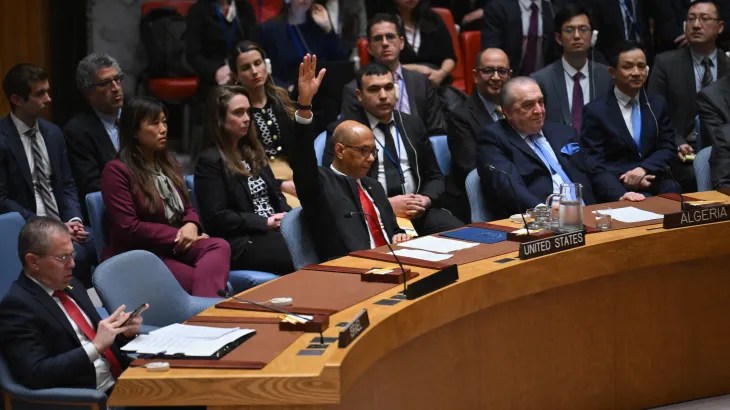
This is the reality today. They claim to reform, to protect rights, to uphold justice, and have these institutions, constitutions and articles to refer to, as evidence of their ‘moral standing’. But in practice, they spread fasad (corruption) by enabling oppressors and silencing the oppressed. The law therefore becomes an instrument of political strategy, applied when useful, and ignored when inconvenient. If this was not the case, then why do these same institutions allow certain states to veto their resolutions, even when the majority of the other states agree upon them? Is it not simply to serve in their greater interests?
The ICJ, for example, issued provisional measures in January recognising that genocide in Gaza at the hands of the Zionist regime “may plausibly be taking place“, yet, the destruction continues unabated. The United Nations has had over 70% of its infrastructure in Gaza bombed, with hundreds of aid workers, from various organisations, having been killed. But still, no legal line has been drawn. But, the system is not failing, it is, in fact, succeeding in what it was built to do: protect friends and punish enemies. How can we then place our trust or call upon a system so clearly forged as a tool of oppression, rather than a pillar of justice?
Islam, however, does not permit such selective justice and instead offers the true solution. The Shariʿah commands that rulers are held to account, that the Ummah is protected, and that no oppression is tolerated. The Prophet ﷺ said:
انْصُرْ أَخَاكَ ظَالِمًا أَوْ مَظْلُومًا ”. قَالُوا يَا رَسُولَ اللَّهِ هَذَا نَنْصُرُهُ مَظْلُومًا، فَكَيْفَ نَنْصُرُهُ ظَالِمًا قَالَ ” تَأْخُذُ فَوْقَ يَدَيْهِ
Help your brother, whether he is an oppressor or he is an oppressed one. People asked, “O Allah’s Messenger (ﷺ)! It is all right to help him if he is oppressed, but how should we help him if he is an oppressor?” The Prophet (ﷺ) said, “By preventing him from oppressing others.” [Sahih Bukhari 2444]
This hadith establishes that justice is not a passive concept, but an active duty. In the Islamic model, accountability is enforced at every level, including against those in power. Historically, the Khilafah, the Islamic political-religious state, implemented this mandate. Under it, even non-Muslims lived as protected citizens with rights secured under Islamic law, and judges issued rulings based on evidentiary standards that applied equally across social and political classes. Institutions, such as the Mazalim courts, were established specifically to investigate complaints even against the state and its officials, unlike today’s regimes, which are structurally immune from being held to account.
And, justice in Islam is not contingent on allegiance or political convenience. As Islam was sent as a solution for all of mankind, it also addresses those who do not plead allegiance to it’s doctrines, as mentioned above. Allah ﷻ says:
يَـٰٓأَيُّهَا ٱلَّذِينَ ءَامَنُوا۟ كُونُوا۟ قَوَّٰمِينَ لِلَّهِ شُهَدَآءَ بِٱلْقِسْطِ ۖ وَلَا يَجْرِمَنَّكُمْ شَنَـَٔانُ قَوْمٍ عَلَىٰٓ أَلَّا تَعْدِلُوا۟ ۚ ٱعْدِلُوا۟ هُوَ أَقْرَبُ لِلتَّقْوَىٰ ۖ وَٱتَّقُوا۟ ٱللَّهَ ۚ إِنَّ ٱللَّهَ خَبِيرٌۢ بِمَا تَعْمَلُونَ
O believers! Stand firm for Allah and bear true testimony. Do not let the hatred of a people lead you to injustice. Be just! That is closer to righteousness. And be mindful of Allah. Surely Allah is All-Aware of what you do. [Surah al-Ma’idah, 8]
Under the Khilafah, the state is obligated to implement the laws of Allah. The Khalifah, the ruler of the state, is not the sovereign legislator but a wakil (trustee) of the Ummah, bound by the Shariʿah to rule with ʿadl (justice), to protect life, honour, and property, and to confront oppression wherever it arises. Importantly, sovereignty remains with the Creator (the state and ruler only enforce it):
إِنِ ٱلْحُكْمُ إِلَّا لِلَّهِ
Legislation belongs to none but Allah. [Surah Yusuf, 12:40]
Therefore, and today, when we approach the concept of ‘justice’, we, as Muslims, cannot continue to rely on legal orders that reject this foundation which exclude our Creator. We cannot expect justice from institutions that deny the right of Allah to legislate. Every appeal to their courts of ‘justice’ undermines this very concept, and they do not understand ‘justice’ better than the One who ordained it.
The genocide in Gaza and the desecration of Muslim lands, is the direct consequence of our disconnection from this aspect of our religion. We must understand that these institutions were created in the aftermath of colonialism and continue to reflect the interests of former colonial powers. The veto powers, mentioned earlier, in the UN Security Council, for example, ensure that no resolution can pass against the will of imperial states. In practice, these institutions facilitate impunity for allies and punishment for enemies.
The call of our time is therefore to abandon reliance on them and to rebuild the holistic alternative that Islam has provided for us. Justice will not come from The Hague. It will not come from Geneva. It will come when the rule of Al-Muqsit, The One who is most fair and just, is re-implemented. That is the justice the Ummah needs. And that is the justice the Ummah must work to deliver. This begins with rejecting the legitimacy of man-made systems, reviving political consciousness rooted in the Qur’an and Sunnah, uniting around the obligation of re-establishing the Khilafah, and preparing the intellectual, social, and political groundwork for its return. It is a collective duty (fard kifayah) that rests on the shoulders of the entire Ummah, until it is fulfilled.
To believe this vision is unrealistic is to deny not only our own history, which evidences that it is materially possible, but to also deny the promise of Allah ﷻ. He says:
وَعَدَ ٱللَّهُ ٱلَّذِينَ ءَامَنُوا۟ مِنكُمْ وَعَمِلُوا۟ ٱلصَّـٰلِحَـٰتِ لَيَسْتَخْلِفَنَّهُمْ فِى ٱلْأَرْضِ كَمَا ٱسْتَخْلَفَ ٱلَّذِينَ مِن قَبْلِهِمْ وَلَيُمَكِّنَنَّ لَهُمْ دِينَهُمُ ٱلَّذِى ٱرْتَضَىٰ لَهُمْ وَلَيُبَدِّلَنَّهُم مِّنۢ بَعْدِ خَوْفِهِمْ أَمْنًۭا ۚ
Allah has promised those of you who believe and do good that He will certainly make them successors in the land, as He did with those before them; and will surely establish for them their faith which He has chosen for them; and will indeed change their fear into security… [Surah an-Nur, 55]
What remains is for the Ummah to answer this call with conviction, preparation, and action.


 Deen and Discourse
Leave a comment